

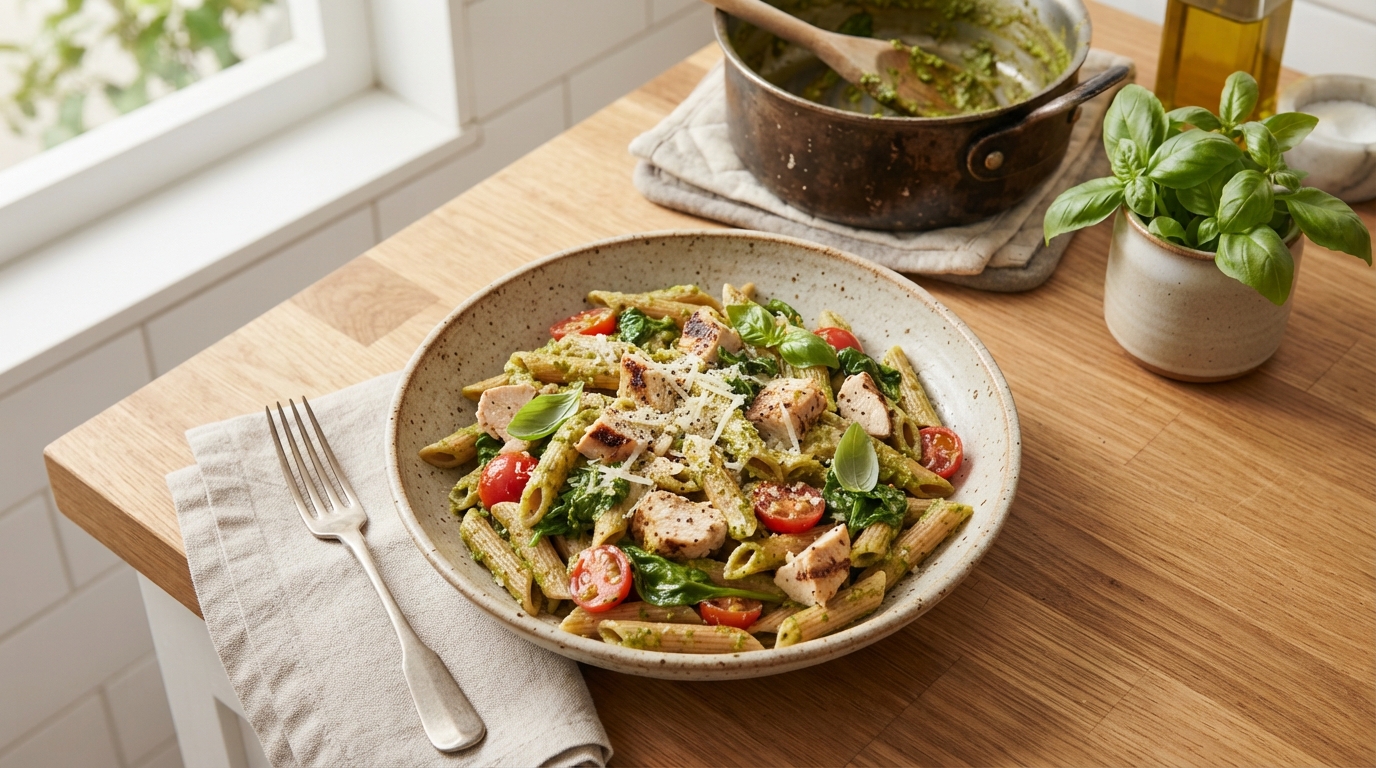
High-protein chicken pesto pasta is the kind of dinner that earns a regular place in a busy-week meal rotation. It combines tender chicken, satisfying pasta, bright pesto and vegetables in one bowl, without requiring a complicated sauce or a long list of steps. The goal is not to make pasta restrictive or overly complicated. It is to build a balanced meal that is quick enough for a weeknight and substantial enough to keep you satisfied. At Her Daily FitActions, we focus on practical home workouts and healthy food ideas that fit real schedules. This recipe follows the same principle: prepare a few ingredients, cook them efficiently and keep the process repeatable.
A serving of chicken provides the main protein, while whole-wheat pasta can add fiber and a slower-digesting carbohydrate option. Spinach and tomatoes bring color and vegetables, and pesto contributes herbs, olive oil and flavor. Harvard’s Healthy Eating Plate recommends building meals around vegetables, healthy protein, whole grains and healthy oils rather than focusing only on one nutrient. [Harvard Healthy Eating Plate]
Why This Chicken Pesto Pasta Works for Busy Weeknights
This recipe is designed around four practical decisions: use quick-cooking chicken pieces, boil the pasta while the chicken cooks, loosen the pesto with pasta water, and finish everything in one pan. Those steps reduce waiting time and prevent the sauce from becoming dry or overly heavy.
· Chicken gives the meal a substantial protein base without requiring a long braise.
· Whole-wheat pasta can make the dish more filling and adds a whole-grain option.
· Spinach and tomatoes increase vegetable variety without adding much prep work.
· Jarred pesto keeps the recipe realistic for busy evenings.
· Reserved pasta water helps create a smooth sauce without needing a separate cream sauce.
If you prefer a lower-fat or dairy-free version, choose a pesto that fits your needs and adjust the amount to taste. The recipe is flexible; the important structure is protein plus vegetables plus a satisfying carbohydrate.
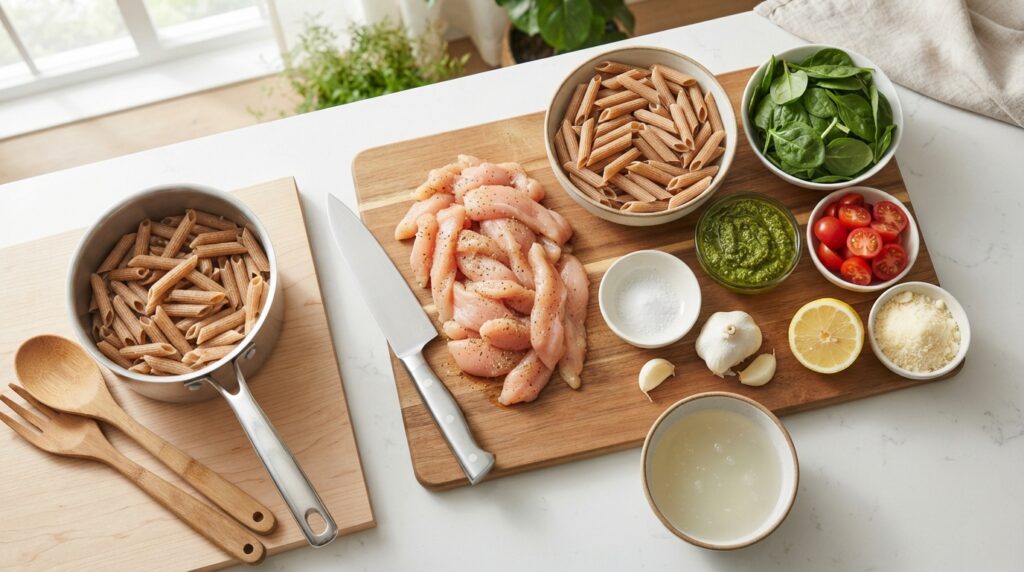
Ingredients for 4 Servings
Ingredients for 4 Servings
· 1 pound boneless, skinless chicken breast or chicken tenderloins, cut into bite-size pieces
· 10 ounces whole-wheat penne, fusilli or another short pasta
· ¾ cup basil pesto, divided and adjusted to taste
· 2 cups baby spinach
· 1½ cups halved cherry tomatoes
· 3 cloves garlic, minced
· 1 tablespoon olive oil
· ½ lemon, juiced
· ¼ cup finely grated Parmesan, optional
· ½ teaspoon Italian seasoning
· ½ teaspoon black pepper
· ¼ teaspoon salt, plus more for the pasta water
· ½ to 1 cup reserved pasta water
For a lighter sauce, start with ½ cup pesto and add more only if needed. For extra vegetables, add sliced zucchini, mushrooms or roasted red peppers. Keep the vegetables quick-cooking so the total preparation time stays close to 25 minutes.
How to Make High-Protein Chicken Pesto Pasta
The order matters more than the equipment. Start the pasta first, prepare the chicken while the water heats, and reserve pasta water before draining.
1. Bring a large pot of salted water to a boil. Cook the pasta according to the package directions until just tender. Before draining, reserve at least 1 cup of pasta water.
2. While the pasta cooks, pat the chicken dry and season it with Italian seasoning, black pepper and a small amount of salt.
3. Heat olive oil in a large skillet over medium-high heat. Add the chicken in a single layer and cook, turning occasionally, until browned and cooked through.
4. Add the minced garlic during the final 30 seconds of chicken cooking. Stir frequently so it becomes fragrant without burning.
5. Add the cherry tomatoes and cook for about one minute, just until they begin to soften.
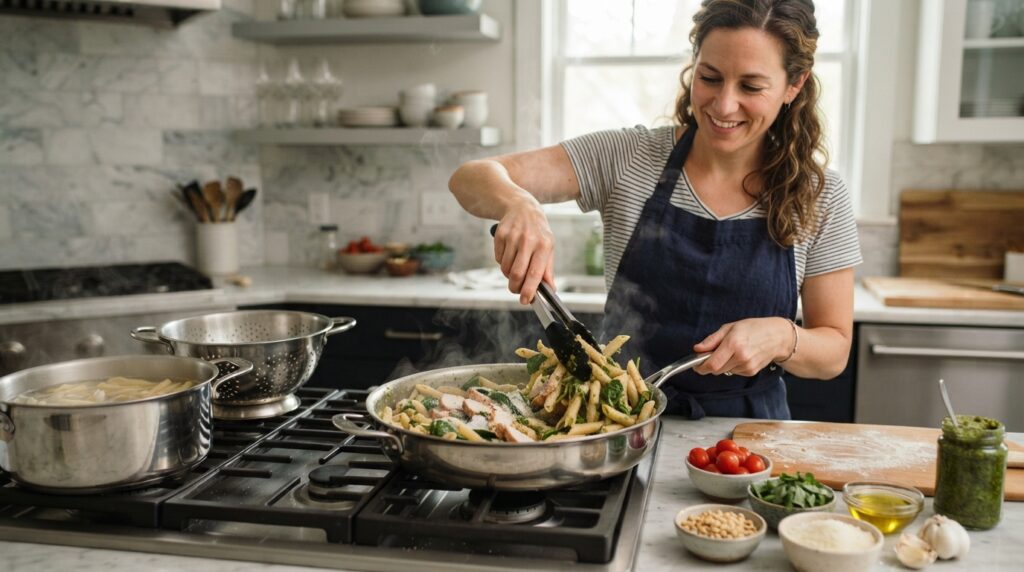
6. Lower the heat. Add the drained pasta, spinach and pesto. Toss gently while adding reserved pasta water a little at a time.
7. Continue tossing until the spinach wilts and the sauce lightly coats the pasta. Add lemon juice and Parmesan if using.
8. Check the chicken pieces in the thickest part. Poultry should reach 165°F internally for food safety.
The USDA recommends cooking poultry to a minimum internal temperature of 165°F, measured with a food thermometer. [USDA FSIS]
Serve immediately with extra black pepper, basil or Parmesan if desired.
Three Amazon Kitchen Gadgets That Fit This Recipe
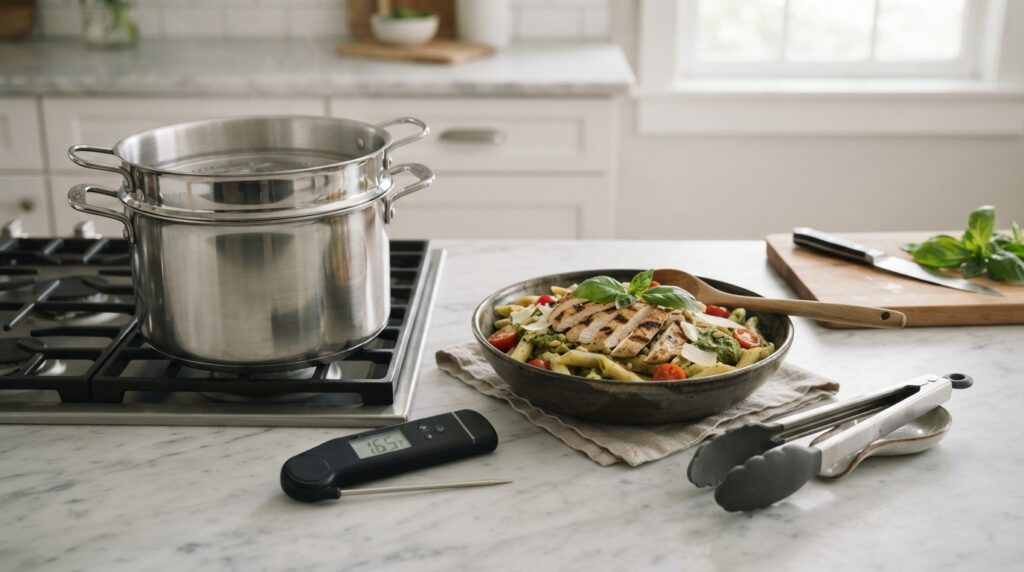
These products are useful because they directly support the recipe. They should be added as contextual affiliate recommendations rather than unrelated shopping links.
1. Pasta Pot With Built-In Strainer Insert
A pasta pot with an integrated strainer insert makes it easier to drain pasta and reserve cooking water without transferring hot noodles to a separate colander. It is especially useful when making one-pot or skillet-finished pasta dishes. Amazon CTA: Shop a Pasta Pot With Strainer Insert on Amazon →
[INSERT HER DAILY FITACTIONS AMAZON AFFILIATE LINK]
2. Instant-Read Meat Thermometer
An instant-read thermometer removes guesswork when cooking chicken. It helps confirm that the thickest piece has reached the recommended safe internal temperature without cutting every piece open. Amazon CTA: Shop an Instant-Read Meat Thermometer on Amazon →
[INSERT HER DAILY FITACTIONS AMAZON AFFILIATE LINK]
3. Silicone Kitchen Tongs
Silicone-tipped tongs make it easy to turn chicken, toss pasta and move ingredients around a skillet. They are more versatile for this recipe than a single-purpose gadget because they can be used for nearly every cooking step. Amazon CTA: Shop Silicone Kitchen Tongs on Amazon →
[INSERT HER DAILY FITACTIONS AMAZON AFFILIATE LINK]
How to Keep the Sauce Creamy Without Heavy Cream
Pesto can become thick when it meets hot pasta, especially if it is added directly from the refrigerator. Reserved pasta water solves that problem. The starchy water loosens the pesto and helps it cling to the noodles.
· Reserve more pasta water than you think you need.
· Lower the heat before adding pesto so the basil flavor stays fresh.
· Add pasta water gradually instead of pouring in the full amount.
· Use lemon juice at the end to brighten the sauce.
· Do not boil pesto aggressively after adding it.
You can also stir a tablespoon or two of plain Greek yogurt into the finished sauce after removing the skillet from direct heat. This changes the texture and flavor, so add it only if you enjoy a tangier, creamier pasta.
Meal-Prep Chicken Pesto Pasta
This recipe can be packed for lunch, but pasta absorbs sauce as it sits. For the best texture, reserve a little extra pesto or a spoonful of pasta water for reheating.
· Cool the pasta promptly and divide it into shallow containers.
· Refrigerate leftovers within two hours of cooking.
· Use airtight containers and keep the refrigerator at 40°F or below.
· Reheat until hot throughout, adding a splash of water if the sauce has thickened.
· Use refrigerated leftovers within three to four days.
The USDA recommends refrigerating perishable foods promptly and using cooked leftovers within three to four days when stored correctly. [USDA FSIS Leftovers]
How to Build a Balanced Plate With This Pasta
The pasta itself contains several food groups, but you can adjust the serving based on your appetite and goals. A practical approach is to keep the chicken portion consistent, add vegetables generously and choose the pasta amount that fits your meal. Harvard’s Healthy Eating Plate suggests making vegetables and fruits the largest part of a meal, with healthy protein and whole grains making up the remaining portions. [Harvard Nutrition Source]
If you are pairing dinner with exercise, the meal can also work well after a home workout because it combines protein and carbohydrates without requiring a separate side dish.
Common Mistakes to Avoid
· Using too much pesto at the beginning and ending with an overly oily dish.
· Overcooking the chicken before the pasta is ready.
· Skipping the reserved pasta water.
· Adding pesto over high heat until the sauce becomes dry.
· Overcrowding the skillet, which prevents the chicken from browning.
· Packing the pasta while it is still steaming hot, which can create excess condensation.
Frequently Asked Questions
Can I use rotisserie chicken?
Yes. Stir shredded or chopped cooked chicken into the skillet during the final stage, just long enough to warm it through.
Can I use regular pasta instead of whole-wheat pasta?
Yes. Regular penne, fusilli or spaghetti all work. Whole-wheat pasta is simply one option for adding whole grains.
You can use a quick sauce made from olive oil, garlic, lemon, Parmesan and pasta water, although the flavor will be different.
How much protein is in chicken pesto pasta?
The exact amount depends on the chicken portion, pasta brand and serving size. Use the nutrition label of your ingredients or a reliable food database for an accurate calculation.
It can be frozen, but the texture of pesto and pasta may change after thawing. Refrigerating a few portions is usually better for this recipe.
What vegetables can I add?
Broccoli, zucchini, mushrooms, asparagus, peas, kale and roasted red peppers all work well.
Can I make this in one pot?
Yes, but the pasta cooking water and chicken cooking steps are easier to control when the pasta is cooked separately and finished in the skillet.
A Quick Dinner You Can Actually Repeat
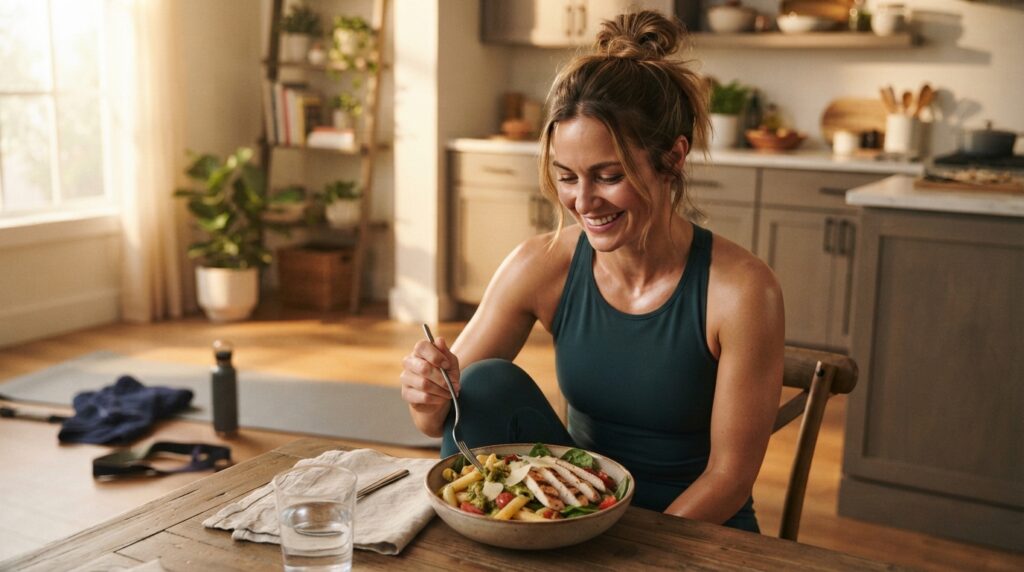
This high-protein chicken pesto pasta works because it is flexible without becoming complicated. You can change the vegetables, use a different pasta shape or adjust the pesto, but the basic method stays the same: cook the protein safely, boil the pasta, combine everything with a little pasta water and finish with fresh flavor. For more practical recipes, visit the Healthy Quick Recipes category. For another protein-focused dinner, link to the High-Protein Shrimp Stir-Fry.
If you want to pair your meal planning with a simple home workout, the 30-Minute Full-Body Home Workout is another relevant internal resource.
References & Citations
· Harvard T.H. Chan School of Public Health. Healthy Eating Plate.
· USDA Food Safety and Inspection Service. Safe Minimum Internal Temperature Chart.
· USDA Food Safety and Inspection Service. Poultry: Safe Food Handling.
· USDA Food Safety and Inspection Service. Leftovers and Food Safety.
· Academy of Nutrition and Dietetics. Food and Nutrition Resources.

