

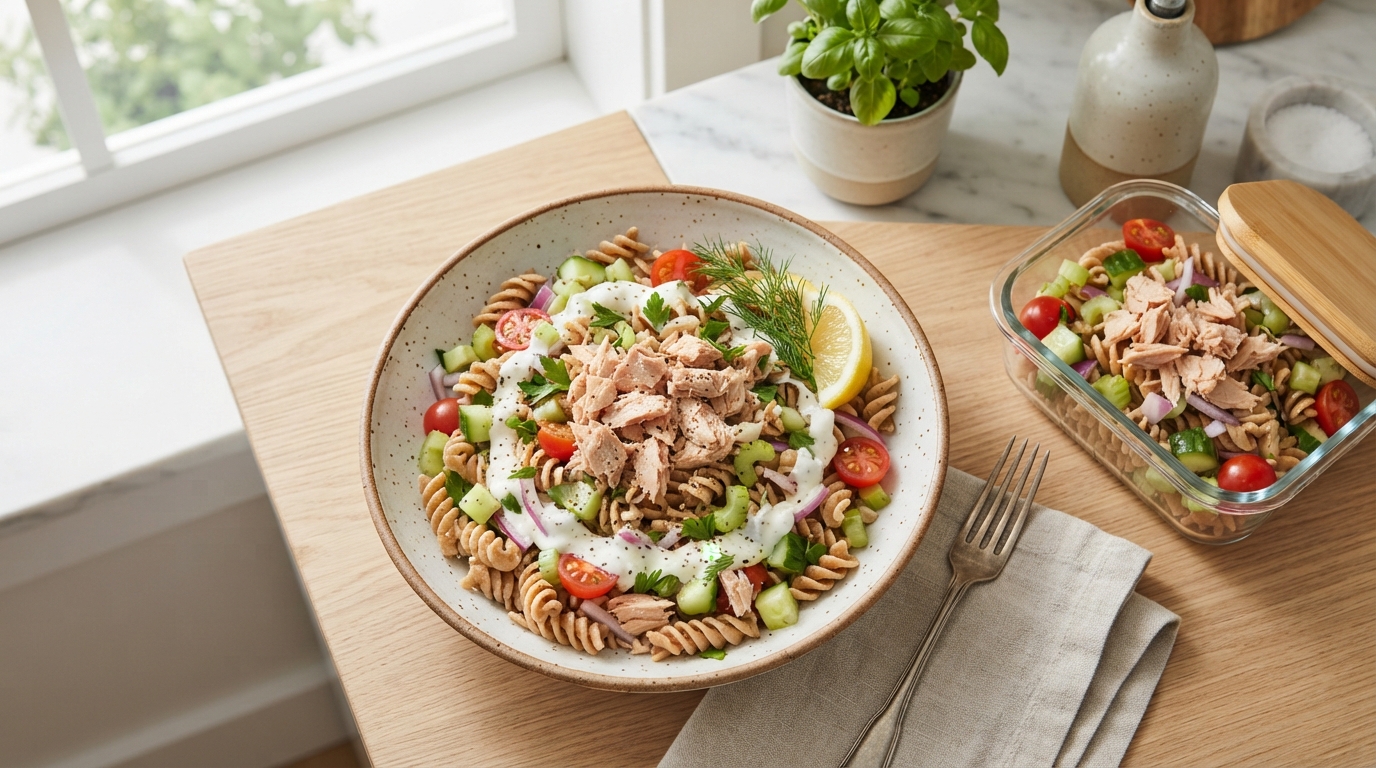
High-protein tuna pasta salad is a useful lunch when you want something filling, fresh and easy to prepare ahead. It combines canned tuna, short pasta, crisp vegetables and a creamy Greek-yogurt dressing in one bowl, so there is no need to cook several separate components. Once the pasta is ready, the rest is mostly chopping and mixing.
This is also the kind of recipe that can make weekday lunches easier. Prepare one batch, portion it into containers and you have a ready-to-eat option that does not depend on reheating. That makes it practical for work, travel days or busy afternoons at home.
At Her Daily FitActions, the focus is on realistic healthy food and home-fitness habits that can be repeated. This recipe follows that approach: accessible ingredients, straightforward preparation and enough flexibility to adapt to what is already in your refrigerator.
Tuna provides the main protein, while pasta contributes carbohydrate and vegetables add color, crunch and volume. Harvard’s Healthy Eating Plate encourages meals built around vegetables, quality protein, whole grains and healthy fats, which is a useful framework for building this lunch rather than focusing on a single nutrient. [Harvard Healthy Eating Plate]
Why This Tuna Pasta Salad Works
It comes together quickly once the pasta water is boiling.
· Canned tuna is convenient and shelf-stable before opening.
· Greek yogurt creates a creamy dressing with a fresh, tangy flavor.
· Cucumber, celery, tomatoes and herbs keep the salad crisp and colorful.
· Whole-wheat pasta is an easy whole-grain option, though regular pasta also works.
· The recipe can be portioned into individual containers for grab-and-go lunches.
If tuna is a frequent part of your diet, variety matters. Current FDA/EPA advice lists canned light tuna among the “Best Choices,” while albacore or white tuna is in the “Good Choices” category because it generally contains more mercury. The guidance is especially important for people who are pregnant, may become pregnant, are breastfeeding, and for children. [FDA Advice About Eating Fish]
Ingredients for 4 Servings
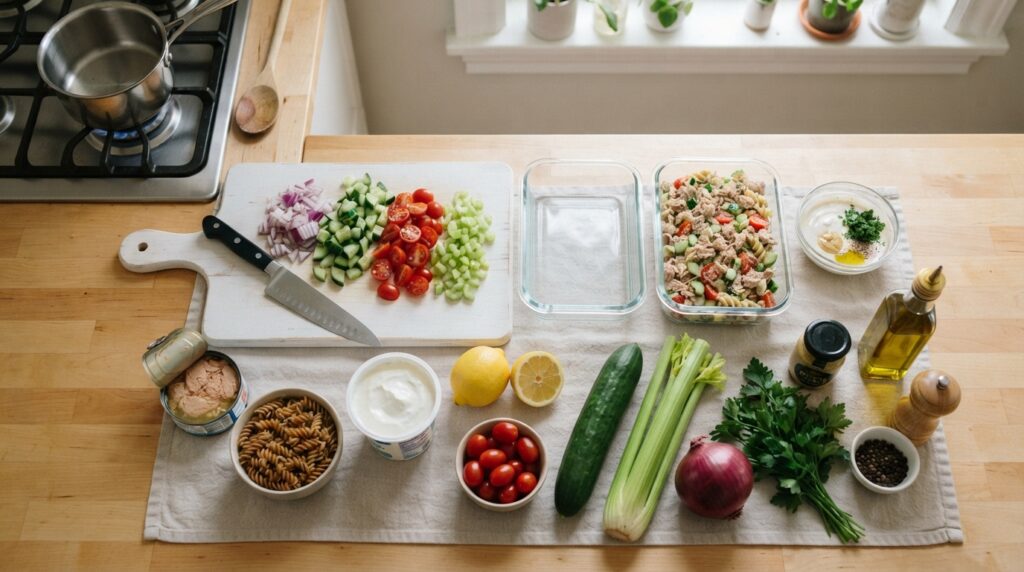
2 cans (about 5 ounces each) canned light tuna, drained
· 8 ounces whole-wheat rotini, shells or another short pasta
· 3/4 cup plain Greek yogurt
· 1 tablespoon mayonnaise, optional
· 1 tablespoon fresh lemon juice
· 1 teaspoon Dijon mustard
· 1 tablespoon extra-virgin olive oil
· 1/2 teaspoon garlic powder
· 1/2 teaspoon black pepper
· 1/4 teaspoon salt, adjusted to taste
· 1 cup diced cucumber
· 1 cup halved cherry tomatoes
· 1/2 cup finely diced celery
· 1/4 cup finely diced red onion
· 1/4 cup chopped parsley or dill
The ingredient list is deliberately flexible. If you dislike raw onion, reduce it or use green onion. If tomatoes make your stored salad watery, pack them separately and stir them in before eating. You can also replace some of the pasta with chickpeas for a different texture.
How to Make High-Protein Tuna Pasta Salad
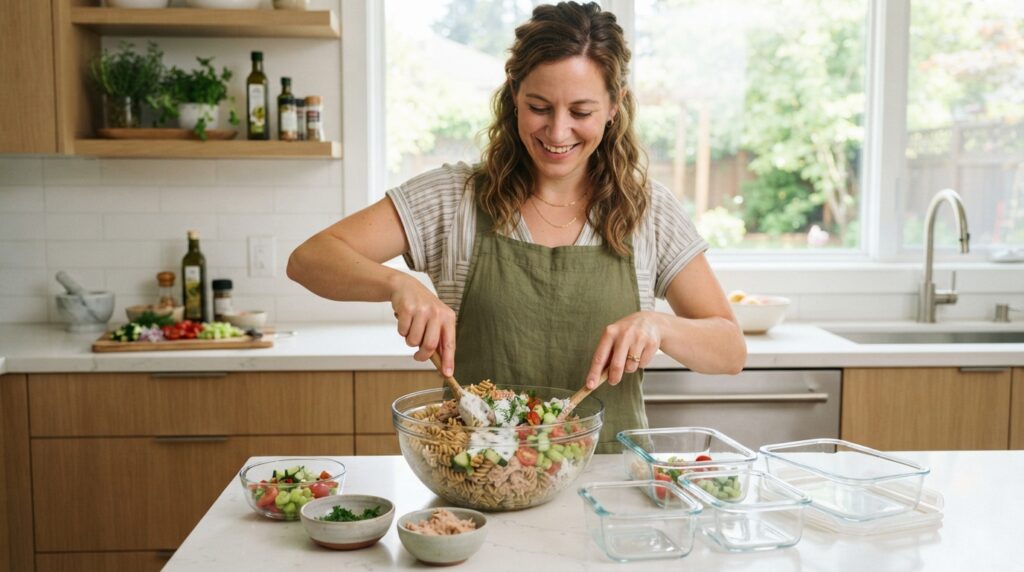
Cold pasta salads can become watery for two reasons: the pasta was not drained well, or watery vegetables released moisture during storage. A few small adjustments prevent most of the problem.
· Drain the pasta thoroughly before mixing.
· Drain canned tuna well before adding it.
· Use thick plain Greek yogurt rather than a very thin yogurt.
· Pat cucumber dry after chopping if it is especially watery.
· Add tomatoes just before serving if you plan to store the salad for several days.
· Keep a spoonful of extra yogurt or a squeeze of lemon available to refresh the dressing the next day.
3 Amazon Kitchen Gadgets That Fit This Recipe
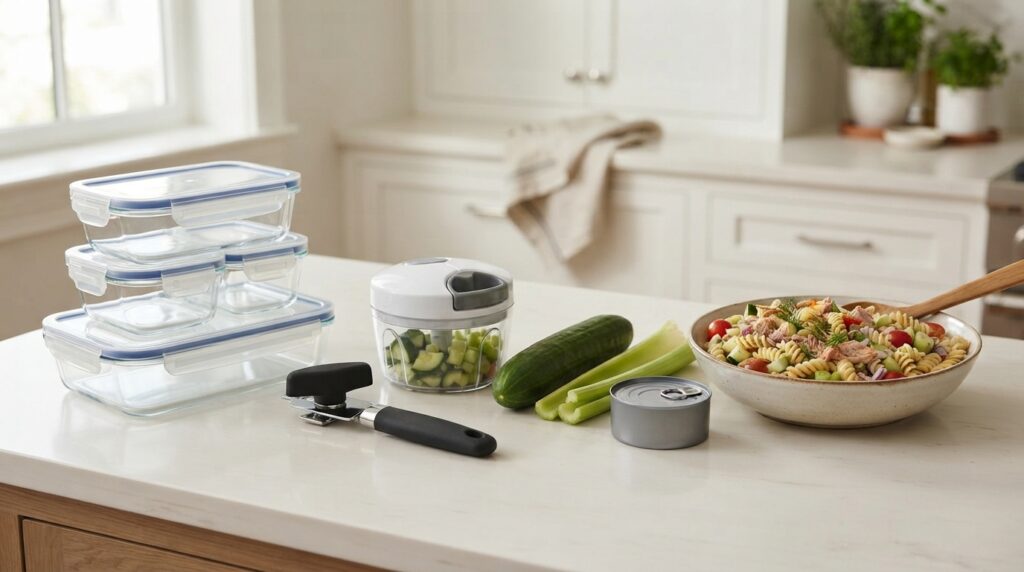
These are natural affiliate placements because each tool supports a real step in the recipe. Before publishing, replace the placeholders with the client’s verified Amazon Associates links and confirm that the exact listing is still active.
1. Glass Meal-Prep Containers With Locking Lids
A set of portion-sized glass containers makes it easy to divide the finished salad immediately. Locking lids are useful for transporting lunch, and clear containers make it easy to see what is ready in the refrigerator.
Amazon CTA: Shop Glass Meal-Prep Containers on Amazon →
[INSERT HER DAILY FITACTIONS AMAZON AFFILIATE LINK]
2. OXO Good Grips Soft-Handled Can Opener
A dependable can opener is directly relevant when tuna is a regular pantry ingredient. OXO currently describes its Soft-Handled Can Opener as having large cushioned handles, an oversized turning knob and a stainless-steel cutting wheel. [OXO Product Page]
Amazon CTA: Shop the OXO Good Grips Can Opener on Amazon →
[INSERT HER DAILY FITACTIONS AMAZON AFFILIATE LINK]
3. Fullstar Original Vegetable Chopper
A vegetable chopper can speed up repetitive prep for cucumber, celery and onion. Fullstar’s current vegetable-chopper range includes its Original Chopper and several compact or multi-function models. Use the chopper for firm vegetables and cut soft tomatoes by hand for better texture. [Fullstar Vegetable Choppers]
Amazon CTA: Shop the Fullstar Vegetable Chopper on Amazon →
[INSERT HER DAILY FITACTIONS AMAZON AFFILIATE LINK]Easy Variations
Mediterranean Tuna Pasta Salad
Add chopped olives, roasted red peppers, cucumber and parsley. A small amount of feta can replace Parmesan-style flavors, while lemon keeps the dressing bright.
Tuna Pasta Salad With Chickpeas
Replace one-third to one-half of the pasta with rinsed chickpeas. This adds a different texture and makes the salad feel more substantial without changing the basic method.
Spicy Tuna Pasta Salad
Stir a little hot sauce, chili crisp or crushed red pepper into the yogurt dressing. Add gradually so the heat does not overpower the lemon and herbs.
Extra-Crunch Version
Add diced bell pepper, shredded carrots or chopped radishes. Keep the pieces small enough that each forkful still includes pasta and tuna.
Meal-Prep and Storage Tips
For meal prep, divide the salad into shallow containers soon after mixing and refrigerate it promptly. USDA guidance says leftovers should be refrigerated within two hours and used within three to four days when kept at 40°F or below. [USDA Handling Leftovers]
· Pack delicate greens separately so they do not wilt.
· Keep extra lemon wedges in a separate small container.
· If the pasta absorbs the dressing overnight, stir in a spoonful of Greek yogurt before eating.
· Do not leave the salad sitting in a warm car, gym bag or office for extended periods. Use an insulated lunch bag with a cold pack when refrigeration is unavailable.
How to Build a More Complete Lunch
The salad already includes protein, carbohydrate and vegetables, but you can adjust the portion based on appetite and activity. Add a piece of fruit, extra vegetables or a small side salad if you want more volume. If you are preparing lunches around a consistent exercise routine, keeping meals simple can make the habit easier to maintain.
For broader healthy-eating habits, readers can continue to 13 Healthy Commitments. For additional meal ideas, use the Healthy Quick Recipes category rather than adding unrelated links simply for SEO.
Common Mistakes to Avoid
· Overcooking the pasta until it becomes soft after chilling.
· Mixing warm pasta directly into the yogurt dressing.
· Failing to drain the tuna thoroughly.
· Adding too much salt before tasting the tuna and dressing.
· Using very large vegetable pieces that make the salad difficult to eat.
· Leaving the prepared salad unrefrigerated for too long.
· Treating tuna as the only seafood option instead of varying fish choices over time.
Frequently Asked Questions
Can I use regular pasta instead of whole-wheat pasta?
Yes. Rotini, shells, penne and macaroni all work. Whole-wheat pasta is simply one option if you want a whole-grain base.
Can I make tuna pasta salad without mayonnaise?
Yes. The recipe works with Greek yogurt, lemon juice and olive oil. The tablespoon of mayonnaise is optional.
Can I use albacore tuna?
Yes, but FDA/EPA advice places albacore or white tuna in a different mercury category than canned light tuna. If mercury exposure is relevant to you, follow current FDA guidance for your situation.
How much protein is in one serving?
The exact amount depends on the tuna, yogurt, pasta brand and serving size. Calculate nutrition from the exact products you use rather than publishing an unsupported fixed number.
Can I make it the night before?
Yes. In fact, chilling can help the flavors blend. Stir before serving and refresh with a little yogurt or lemon if the pasta has absorbed too much dressing.
How long does tuna pasta salad last in the refrigerator?
Use it within three to four days when refrigerated promptly at 40°F or below, following USDA leftover guidance.
Can I add eggs?
Yes. Chopped hard-boiled eggs can add another texture and protein source. Keep the finished salad refrigerated and follow safe storage practices.
What vegetables work best?
Cucumber, celery, bell pepper, carrots, peas, tomatoes, radishes and green onion all work well. Choose vegetables that stay crisp when chilled.
A Quick Lunch Worth Repeating
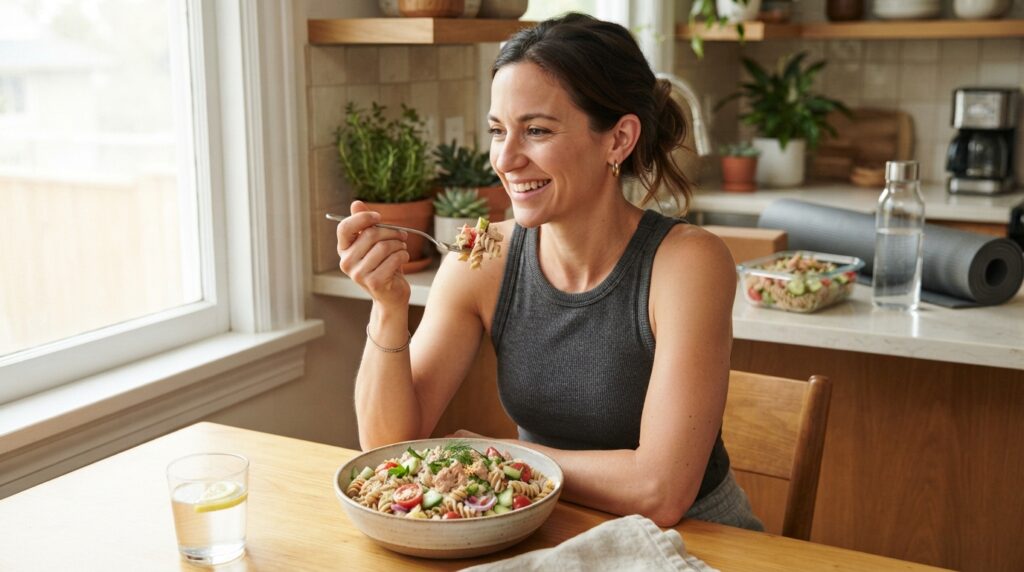
This high-protein tuna pasta salad works because the method is simple enough to repeat. Keep tuna and pasta in the pantry, use whatever crisp vegetables are available and mix a quick yogurt-based dressing. The result is a lunch that can be made ahead without turning meal prep into a major weekend project.
For another protein-focused meal, see the High-Protein Shrimp Stir-Fry. To pair meal planning with movement, the 30-Minute Full-Body Home Workout is a relevant next step.
References & Citations
· Harvard T.H. Chan School of Public Health — Healthy Eating Plate
· U.S. Food and Drug Administration — Advice About Eating Fish
· FDA — Questions & Answers on Fish Advice
· USDA FSIS — How Long Will Cooked Food Stay Safe in the Refrigerator?
· USDA FSIS — How Do I Handle Leftovers Safely?

