

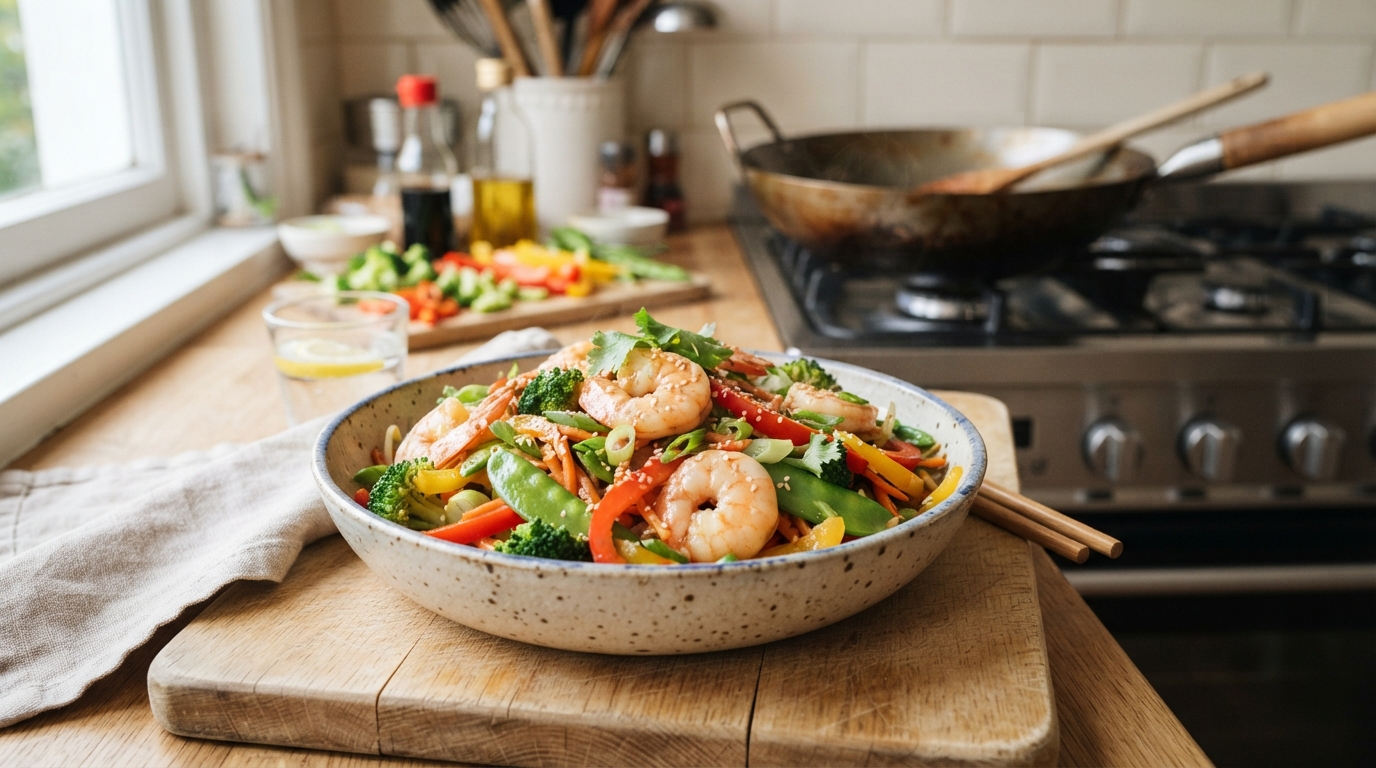
Some weeknight dinners are technically quick but still leave you with three pans, a pile of dishes, and half the kitchen to clean. This high protein shrimp stir fry takes the opposite approach: one wok or large skillet, a generous portion of shrimp, colorful vegetables, and a simple homemade sauce that cooks in minutes.
Shrimp is particularly useful when time is limited because it cooks extremely quickly. That makes this recipe practical for evenings when you want something fresher than takeout but do not want to spend an hour preparing dinner.
At Her Daily FitActions, the focus is on home fitness and realistic healthy eating for busy women. This recipe fits that approach because you can have the ingredients chopped before the wok gets hot and complete the actual cooking in roughly ten minutes.
The recipe uses broccoli, bell peppers, carrots and snow peas for texture and color, but the vegetable combination is flexible. You can use whatever is already in your refrigerator as long as you understand one basic stir-fry rule: tougher vegetables go into the pan before softer ones.
Why This Shrimp Stir-Fry Works for a Quick High-Protein Dinner
A useful quick dinner needs more than a short cooking time. It should also be easy to repeat, easy to customize and substantial enough to feel like an actual meal.
Shrimp works particularly well because it gives the dish a protein-focused centerpiece without requiring the longer cooking time associated with many meats. A balanced stir-fry structure also makes it easy to combine vegetables, protein and an optional whole-grain or noodle serving. Harvard’s Healthy Eating Plate recommends building meals around vegetables, whole grains when used, and healthy protein sources such as fish.1
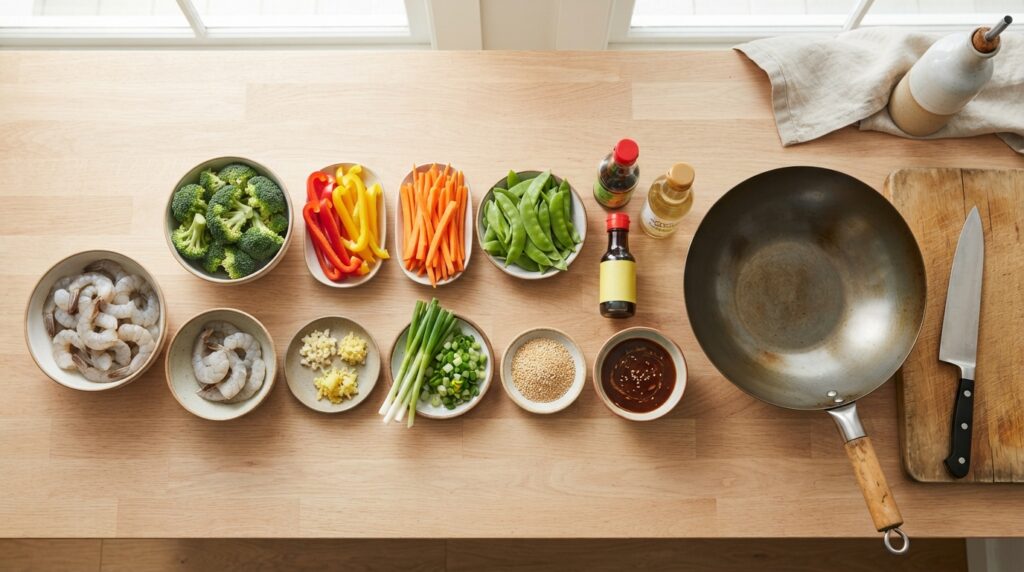
Ingredients for 4 servings
· 1 1/4 pounds large raw shrimp, peeled and deveined
· 2 cups broccoli florets
· 1 red bell pepper, thinly sliced
· 1 yellow or orange bell pepper, thinly sliced
· 1 medium carrot, cut into thin matchsticks
· 1 cup snow peas or sugar snap peas
· 3 green onions, sliced
· 3 cloves garlic, finely minced
· 1 tablespoon fresh ginger, grated
· 1 tablespoon avocado, peanut or other high-heat cooking oil
· 1 teaspoon sesame seeds, optional
· Cooked brown rice, quinoa or noodles for serving, optional
For the quick stir-fry sauce
· 1/3 cup low-sodium soy sauce
· 1/3 cup water or unsalted broth
· 1 1/2 tablespoons rice vinegar
· 1 tablespoon honey
· 1 teaspoon toasted sesame oil
· 2 teaspoons cornstarch
· 1/4 teaspoon crushed red pepper flakes, optional
· Freshly ground black pepper to taste
If you use regular soy sauce rather than reduced-sodium soy sauce, start with less and adjust after tasting. The sauce reduces quickly in a hot wok, which concentrates both its flavor and saltiness.
Why the vegetable mix matters
Broccoli and carrots provide crunch and hold up well under high heat. Bell peppers add sweetness, while snow peas cook quickly and help keep the finished dish fresh rather than heavy.
You do not need exactly these vegetables. Good alternatives include zucchini, mushrooms, bok choy, asparagus, green beans, cabbage and sliced onion. The key is cooking them according to texture rather than throwing everything into the wok at once.
How to Make Shrimp Stir-Fry Without Overcooking the Shrimp
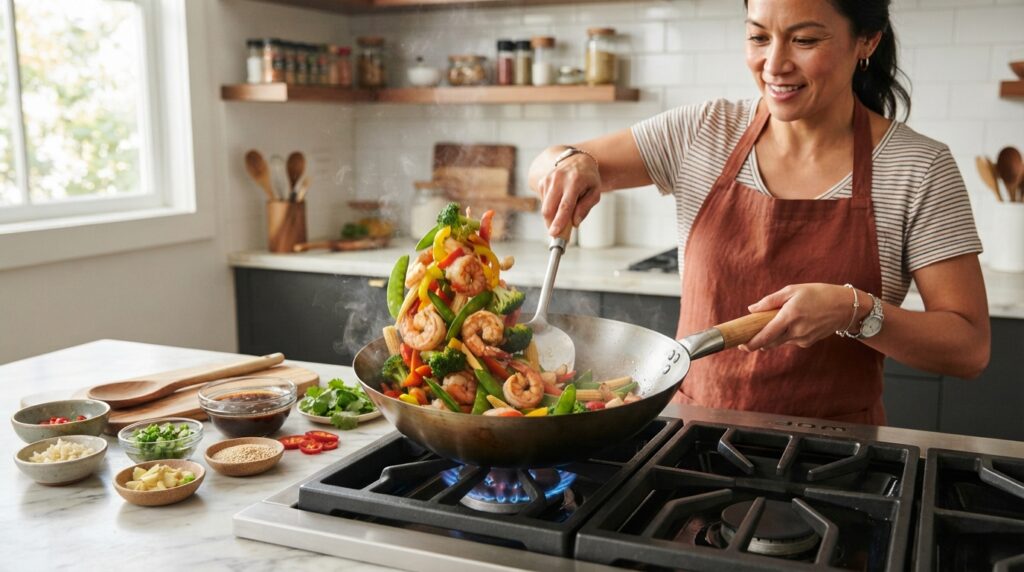
The biggest mistake with shrimp stir-fry is not usually the sauce. It is leaving the shrimp in the wok while every vegetable finishes cooking. Shrimp cooks much faster than carrots or broccoli, so cooking the shrimp briefly and removing it gives you far more control.
Step 1: Mix the sauce first
Whisk the soy sauce, water or broth, rice vinegar, honey, sesame oil, cornstarch and optional chili flakes together in a small bowl. Whisk until you cannot see any dry cornstarch. Stir-fry cooking happens quickly, so have the sauce ready before the wok gets hot.
Step 2: Dry the shrimp
Pat the shrimp dry thoroughly with paper towel. Excess surface moisture creates steam instead of helping the shrimp make quick contact with the hot wok. Season lightly with black pepper. Keep raw shrimp and any utensils or surfaces that touch it separate from ready-to-eat ingredients, and wash them thoroughly before reuse, as recommended by the FDA.2
Step 3: Heat the wok
Place your wok or large skillet over medium-high to high heat. Allow it to become properly hot before adding the cooking oil, then swirl the oil around the cooking surface.
Step 4: Cook the shrimp briefly
Add the shrimp in one layer. Cook for roughly one minute before stirring. Continue cooking briefly until the outside is beginning to turn opaque, then transfer the shrimp to a clean plate before it is completely finished. It will finish cooking when returned to the sauce. For food safety, the FDA notes that cooked shrimp should be firm, pearly and opaque.2
Step 5: Stir-fry the firm vegetables
Add broccoli and carrots first. Cook for approximately two minutes while stirring frequently. If the broccoli pieces are large, add a tablespoon or two of water and cover for about 30 seconds to create a short burst of steam.
Step 6: Add the remaining vegetables
Add bell peppers and snow peas. Continue stir-frying for another one to two minutes. The vegetables should be hot and cooked but still have some structure.
Step 7: Add garlic and ginger
Push the vegetables slightly outward and add the garlic and ginger toward the center of the wok. Cook for around 20-30 seconds until fragrant. Do not let the garlic burn.
Step 8: Finish with the sauce
Whisk your prepared sauce again because cornstarch settles quickly. Pour it into the wok and stir. Return the shrimp and cook for another one to two minutes until the sauce becomes glossy and lightly coats everything. Turn off the heat as soon as the shrimp are fully cooked.
Quick Recipe Summary
| Detail | Amount |
| Prep Time | About 10 minutes |
| Cooking Time | About 8-10 minutes |
| Total Time | About 20 minutes |
| Servings | 4 |
| Main Protein | Shrimp |
| Best For | Fast dinner, post-workout meal, meal prep |
| Category | Healthy Quick Recipes |
For another seafood-based meal already on the website, readers can continue to the Minted Salsa Salmon Recipe. It gives the recipe cluster a second seafood option without targeting the same stir-fry keyword.
3 Useful Amazon Kitchen Gadgets for Making Stir-Fry
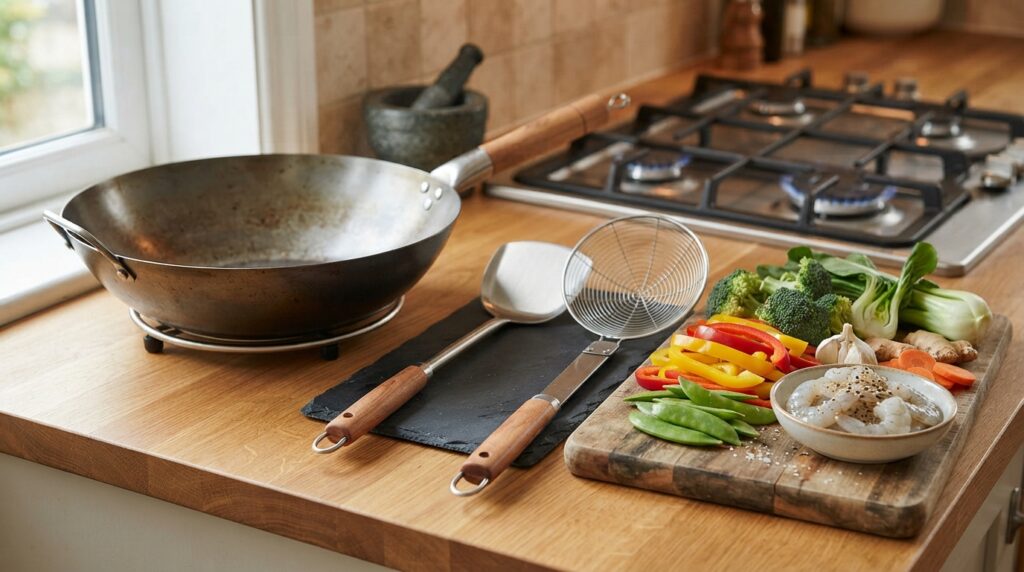
These tools are not required to make the recipe. A large skillet and ordinary cooking utensil will work. However, this article gives us a natural affiliate opportunity because the products directly support the cooking method rather than being inserted randomly.
1. Carbon-Steel Wok
Best for regular stir-fries, fried rice, vegetables and Asian-style home cooking. A flat-bottom carbon-steel wok is particularly practical for standard residential stovetops because it can sit directly on the burner and provides a wide cooking surface for fast tossing and evaporation.
Why it fits this recipe: the wide cooking surface gives the shrimp and vegetables more room to contact the hot pan instead of piling together and steaming.
2. Long Wok Spatula
Best for tossing vegetables, shrimp and other ingredients efficiently around a hot wok. A longer handle helps keep your hand farther from the hot cooking surface while the broad head follows the curve of the wok.
Why it fits this recipe: a wok spatula makes it easier to move ingredients along the curved sides than a small standard spatula.
3. Stainless-Steel Spider Strainer
Best for lifting shrimp, noodles, dumplings or vegetables quickly from hot liquid or oil. A medium-size spider strainer is versatile enough for noodles and blanching as well as stir-fry prep.
Why it fits this recipe: it can quickly remove shrimp or blanched ingredients and is especially useful if serving the stir-fry with noodles.
How to Turn This Into a Complete Meal
A shrimp-and-vegetable stir-fry can stand alone, but adding a grain can make it more substantial. Good options include:
· Brown rice
· Quinoa
· Jasmine rice
· Whole-grain noodles
· Soba noodles
· Cauliflower rice if you simply want more vegetables
If you are eating this after training, you do not need to make the meal unnecessarily complicated. Shrimp, vegetables and an appropriate serving of rice or another carbohydrate create a straightforward combination. This general plate structure also aligns with Harvard’s guidance to pair vegetables with a quality protein source and, where appropriate, whole grains.1
Readers interested in building more consistent eating habits can also continue to the site’s 13 Healthy Commitments guide.
How to Meal Prep Shrimp Stir-Fry
Shrimp stir-fry can be prepared ahead, but it requires slightly more care than chicken or turkey because shrimp becomes rubbery if repeatedly overcooked. For the best result, slightly undercook the vegetables during the original preparation.
Divide the stir-fry into shallow meal-prep containers and refrigerate it promptly. When reheating, use only enough time to heat the food thoroughly rather than repeatedly cooking the shrimp. USDA food-safety guidance recommends refrigerating cooked leftovers promptly in shallow containers and using most refrigerated leftovers within 3 to 4 days.4
Meal-prep tip
Store rice separately if possible. This makes it easier to heat the rice first and add the shrimp mixture toward the end, reducing the amount of reheating the seafood receives.
Easy Shrimp Stir-Fry Variations
Spicy garlic shrimp stir-fry
Double the garlic and add chili garlic sauce or crushed red pepper to the sauce.
Ginger sesame shrimp stir-fry
Increase the fresh ginger and add a small amount of toasted sesame oil at the end rather than cooking all of it over high heat.
Shrimp and broccoli stir-fry
Skip the peppers and snow peas and increase the broccoli. This makes the ingredient list shorter without changing the cooking technique.
Shrimp noodle stir-fry
Cook noodles separately, drain them and add them to the wok when the sauce goes in.
Extra-vegetable stir-fry
Add mushrooms, bok choy or cabbage and reduce the amount of grain served underneath.
For additional quick meal ideas after this recipe, link naturally to the Healthy Quick Recipes category.
Common Shrimp Stir-Fry Mistakes
Putting wet shrimp into the wok
Dry shrimp browns more effectively. Wet shrimp immediately lowers the surface temperature and releases additional water.
Overcrowding the wok
If the wok is too full, cook the shrimp in two batches.
Cooking everything together
Carrots, broccoli, peppers and shrimp do not need the same amount of cooking time.
Making the sauce after cooking starts
Have everything ready before heating the wok. Stir-frying moves too quickly to stop halfway through and measure several sauce ingredients.
Overcooking the shrimp
Remove the shrimp early and return it at the end so it stays tender.
Frequently Asked Questions
Is shrimp stir-fry high in protein?
Shrimp is a protein-rich seafood, and this recipe uses a generous shrimp-to-vegetable ratio. The exact protein per serving depends on the shrimp brand, size, final serving size and any grain or noodles served alongside it. The FDA describes fish and shellfish as sources of high-quality protein and other essential nutrients.2 For exact nutrient values by product and serving size, USDA FoodData Central is the appropriate federal reference database.5
Can I use frozen shrimp?
Yes. Frozen peeled and deveined shrimp makes this recipe particularly convenient. Thaw it safely, then pat it thoroughly dry before cooking. The FDA recommends thawing frozen seafood in the refrigerator overnight, or more quickly in a sealed bag under cold water; microwave defrosting is also acceptable when the seafood will be cooked immediately.2
Can I use pre-cooked shrimp?
You can, but add it only near the end because it has already been cooked. Heating it for the full stir-fry process will usually make it tough.
What vegetables are best for shrimp stir-fry?
Broccoli, peppers, carrots, snow peas, mushrooms, zucchini, cabbage, bok choy and green beans all work well. Use a combination of colors and textures.
Can I make shrimp stir-fry without a wok?
Absolutely. Use the largest skillet you own. A wok makes tossing and high-heat cooking easier, but it is not essential.
What can I use instead of soy sauce?
Tamari works well when a gluten-free product is required. Coconut aminos can also be used, although its flavor and sweetness differ, so adjust the sauce to taste.
Is this good for meal prep?
Yes, but shrimp benefits from gentle reheating. Prepare only the number of portions you expect to use over the next few days and refrigerate them promptly. For food safety, USDA advises using most cooked leftovers within 3 to 4 days and reheating leftovers to 165°F when reheating is needed.4
What should I serve with shrimp stir-fry?
Brown rice, quinoa, noodles, jasmine rice or cauliflower rice all work. Choose the side according to your appetite and overall meal.
Make Quick Healthy Dinners Easier to Repeat
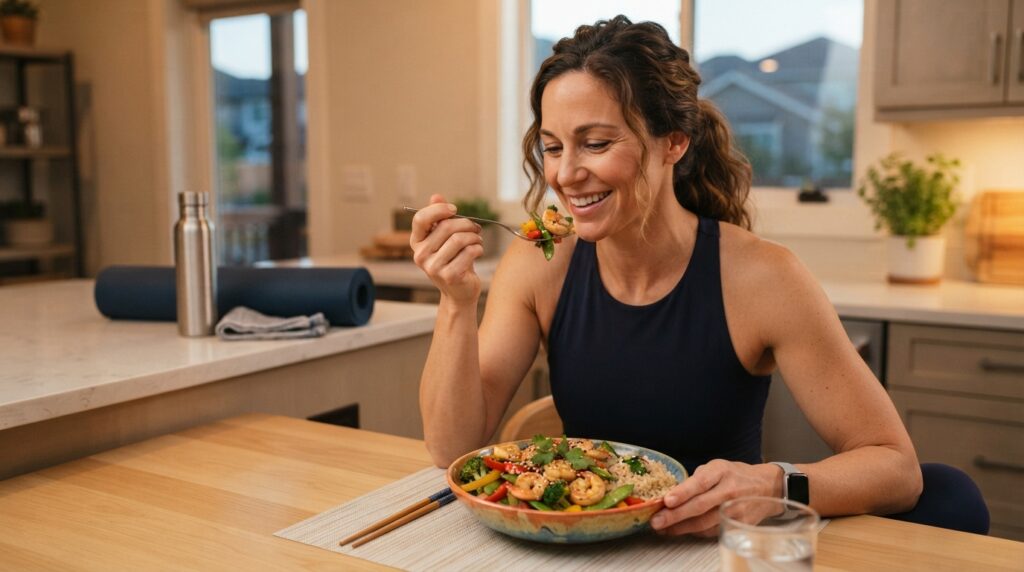
The biggest advantage of this high protein shrimp stir fry is not that it follows a complicated diet rule. It is that it gives you a fast dinner formula you can use repeatedly.
Keep frozen shrimp available, choose three or four vegetables, mix a simple sauce and have your rice or noodles ready before the wok gets hot. Once you understand the cooking order, the recipe becomes easier to repeat.
The same approach works across the rest of your weekly routine: keep meals practical and make exercise easy to access. If you want a structured session to pair with your meal planning, the site’s 30-Minute Full-Body Home Workout is already live and provides a natural contextual internal link.
For more quick breakfast, lunch and dinner ideas, browse Healthy Quick Recipes on Her Daily FitActions.
REFERENCES & CITATIONS
1. Harvard T.H. Chan School of Public Health, The Nutrition Source. Healthy Eating Plate. Used for balanced-meal structure, vegetables, whole grains and healthy protein guidance.
2. U.S. Food and Drug Administration. Selecting and Serving Fresh and Frozen Seafood Safely. Used for seafood handling, cross-contamination prevention, safe thawing, and shrimp doneness guidance.
3. U.S. Food and Drug Administration. Safe Food Handling. Used for refrigeration, thawing and general safe-handling guidance.
4. USDA Food Safety and Inspection Service. Leftovers and Food Safety. Used for prompt refrigeration, shallow-container cooling, the 3-to-4-day refrigerated leftovers window, and safe reheating.
5. U.S. Department of Agriculture, Agricultural Research Service. FoodData Central. Federal food-composition database used as the reference point for nutrient data.

