


Busy mornings make breakfast easy to skip, especially when you are trying to get ready for work, manage a family, or fit a workout into the day. A recipe that needs pans, chopping, and ten minutes at the stove can feel like too much before the day has properly started. That is where high protein cottage cheese egg bites earn their place in a weekly meal-prep routine.
These small baked egg cups combine eggs and cottage cheese into a soft, creamy base that can be prepared in one batch, refrigerated, and reheated in seconds. At Her Daily FitActions, the goal is to make healthy eating and home fitness practical for busy women, and this recipe fits that approach: simple ingredients, minimal cleanup, easy portioning, and enough flexibility to change the flavors from week to week.
The basic recipe uses eggs, cottage cheese, a modest amount of shredded cheese, vegetables, and simple seasonings. You can keep the bites vegetarian, add turkey bacon or cooked chicken, use mostly egg whites, or change the vegetables depending on what is already in your refrigerator.
This guide gives you the complete cottage cheese egg bites recipe, explains why cottage cheese works so well, shows you how to avoid rubbery egg bites, provides five flavor variations, and covers storage, freezing, and reheating so breakfast is ready when you are
Why Cottage Cheese Egg Bites Are a Smart High-Protein Breakfast

A useful breakfast should do more than simply be fast. It should be easy to repeat, contain foods you actually enjoy, and help you build a balanced meal without turning the morning into another project. Harvard Health’s 2026 healthy breakfast guidance1 recommends including protein alongside fiber-rich carbohydrates and other nutrient-rich foods. Eggs and cottage cheese are both examples of protein-containing breakfast foods, which makes them an easy base for a make-ahead savory meal.
Cottage cheese also solves one of the main problems with homemade egg muffins: texture. Plain baked eggs can become firm or rubbery when overcooked. Blending cottage cheese into the egg mixture adds moisture and produces a smoother, more custard-like center without needing heavy cream.
The combination is practical for meal prep because the finished bites are:
· Easy to portion into individual servings
· Simple to reheat before work or after a morning workout
· Flexible enough for vegetables, herbs, lean meats, and different cheeses
· Compact enough to pack for work or school
· Useful for anyone who prefers a savory breakfast over oats or smoothies
If you like having more than one high-protein breakfast option in rotation, pair these with the site’s high-protein breakfast egg wrap recipe. The egg wrap works well when you have a few extra minutes, while the egg bites are the better grab-and-go option.
Ingredients for Fluffy High-Protein Cottage Cheese Egg Bites
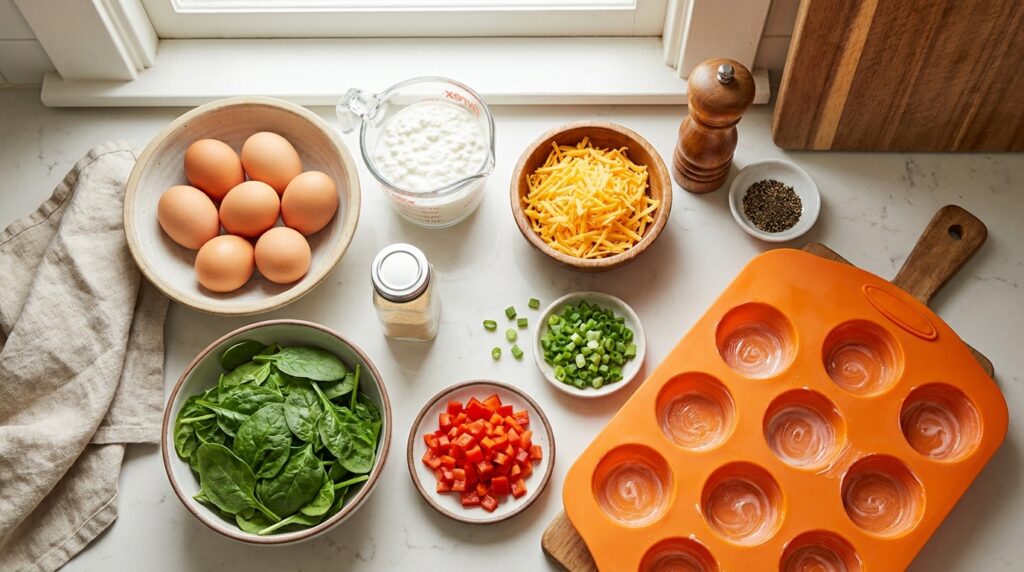
Eggs and cottage cheese form the protein-rich base of this recipe. USDA FoodData Central2 is the federal source for food composition data and lists eggs and dairy foods among the foods for which nutrient information can be checked. Exact nutrition will vary by egg size, cottage-cheese brand, fat percentage, cheese, and any add-ins, so use the nutrition label on the products you actually buy if you need precise numbers.
For 12 egg bites, you will need:
· 8 large eggs
· 1 cup cottage cheese (2% or full-fat both work well)
· 1/2 cup shredded cheddar, mozzarella, Monterey Jack, or a combination
· 1/2 cup finely chopped spinach
· 1/3 cup finely diced red bell pepper
· 2 green onions, thinly sliced
· 1/4 teaspoon garlic powder
· 1/4 teaspoon black pepper
· Small pinch of salt, optional, depending on how salty your cheese is
· Nonstick spray or a lightly greased silicone muffin pan
Why each ingredient matters
Eggs. Eggs provide structure and make the bites easy to portion. Whole eggs also create a richer texture than egg whites alone.
Cottage cheese. This is the ingredient that changes the texture. Once blended, the curds disappear into the egg mixture and create a soft, creamy base. If you dislike the texture of cottage cheese on its own, this recipe is a good way to use it because you do not eat visible curds.
Shredded cheese. A small amount adds flavor and improves the finished texture. You do not need a large quantity because the cottage cheese already provides creaminess.
Vegetables. Spinach, peppers, mushrooms, broccoli, or onions add color and variety. Keep the pieces small so the egg bites hold together.
Seasonings. Garlic powder, black pepper, smoked paprika, chili flakes, or dried herbs can completely change the flavor without changing the basic recipe.
If you use a blender to get an especially smooth base, the site’s Vitamix blender review is a relevant comparison if you are already shopping for a multi-purpose blender for smoothies, soups, sauces, and meal-prep recipes.
Quick Recipe Summary
| Yield | 12 egg bites |
| Prep Time | 10 minutes |
| Bake Time | 20-25 minutes |
| Oven | 325°F / 163°C |
| Serving Idea | 2-3 egg bites with fruit, whole-grain toast, or another fiber-rich side |
How to Make Cottage Cheese Egg Bites Step by Step

Because this recipe contains multiple raw eggs, cook the bites thoroughly. FDA egg-safety guidance3 advises cooking dishes containing eggs thoroughly and gives 160°F as the target for egg-containing dishes. A food thermometer is the best way to confirm doneness if you are unsure.
1. Preheat and prepare the pan
Preheat the oven to 325°F (163°C). Lightly grease a 12-cup silicone muffin pan or use silicone muffin liners. Silicone generally releases baked egg bites more cleanly than paper liners.
2. Prepare the vegetables
Finely chop the spinach, red bell pepper, and green onions. If you use vegetables that release a lot of water, such as mushrooms or zucchini, sauté them briefly first and allow excess moisture to evaporate. Too much water can make the finished bites wet around the edges.
3. Blend the egg base
Add the eggs, cottage cheese, shredded cheese, garlic powder, black pepper, and optional salt to a blender. Blend for about 20 to 30 seconds, just until the mixture looks smooth. There is no need to whip a large amount of air into it.
4. Add the fillings
Divide the chopped vegetables evenly between the 12 muffin cups. Pour the blended egg mixture over the vegetables, filling each cup about three-quarters full. Give each cup a gentle stir so the fillings are evenly distributed.
5. Bake gently
Bake for 20 to 25 minutes, or until the centers are just set and no longer look wet. Avoid leaving them in the oven long after they have set, because overbaking is the easiest way to create rubbery egg bites.
For an even softer texture, you can place a small oven-safe pan of hot water on a lower rack while the bites bake. The added steam is optional, but it can help create a gentler baking environment.
6. Rest before removing
Let the egg bites cool in the pan for about five minutes. Run a small silicone spatula or thin knife around the edges if needed, then lift them out and cool completely before storing.
5 Cottage Cheese Egg Bite Variations So Meal Prep Does Not Get Boring

Cottage cheese counts within the dairy group, and USDA MyPlate’s dairy guidance4 includes cottage cheese among dairy foods. For this recipe, however, the biggest practical advantage is flexibility: the mild flavor lets you change the vegetables, herbs, and other add-ins without needing a completely new recipe.
1. Spinach and Feta
Replace the shredded cheddar with crumbled feta and increase the spinach slightly. Add dried oregano and black pepper. This version has a salty, Mediterranean-style flavor, so additional salt is usually unnecessary.
2. Turkey Bacon and Cheddar
Add finely chopped cooked turkey bacon and use sharp cheddar for more flavor. Make sure the bacon is fully cooked before adding it to the egg mixture. This variation works well for people searching for a homemade alternative to coffee-shop breakfast bites.
3. Broccoli and Cheddar
Use very small pieces of lightly steamed broccoli and cheddar cheese. Pat the broccoli dry before adding it so excess water does not collect in the muffin cups.
4. Roasted Red Pepper and Mozzarella
Use drained roasted red peppers, mozzarella, green onion, and a small pinch of Italian seasoning. Drain jarred peppers well before chopping.
5. Mushroom and Herb
Sauté finely chopped mushrooms until their moisture has cooked away, then combine them with parsley, chives, black pepper, and a mild cheese. Cooking the mushrooms first is important because raw mushrooms release water during baking.
You can also split one batch into two flavors. Prepare the same blended egg-and-cottage-cheese base, then put different fillings into six cups on each side of the pan. That gives you variety without doubling the prep work.
How to Meal Prep, Store, Freeze, and Reheat Egg Bites

Cooked egg bites are ideal for advance preparation, but food safety matters. USDA leftovers guidance5 recommends using refrigerated leftovers within three to four days and keeping them in covered, airtight storage. That makes a three- or four-day batch a sensible refrigerator meal-prep window.
Refrigerating cottage cheese egg bites
Allow the bites to cool, then place them in an airtight container. If stacking them, put a piece of parchment between layers so they do not stick together. Refrigerate promptly.
Freezing egg bites
For longer storage, cool the bites completely, place them on a tray until firm, then transfer them to a freezer-safe container or bag. Freezing them individually first helps prevent them from sticking into one solid block.
Reheating from the refrigerator
Microwave one or two bites in short intervals until heated through. Start with about 20 to 30 seconds and add more time as needed because microwave power varies. Avoid overheating, which can make the texture tougher.
Reheating from frozen
For the best texture, thaw frozen egg bites overnight in the refrigerator and then reheat. If reheating directly from frozen, use a lower microwave power and heat in short intervals so the center warms without drying the outside.
How many should you meal prep?
For one person, a 12-bite batch works well for several breakfasts if you eat two or three at a time. If you are cooking for a family, double the recipe and use two muffin pans.
What to Eat with Cottage Cheese Egg Bites for a More Balanced Breakfast
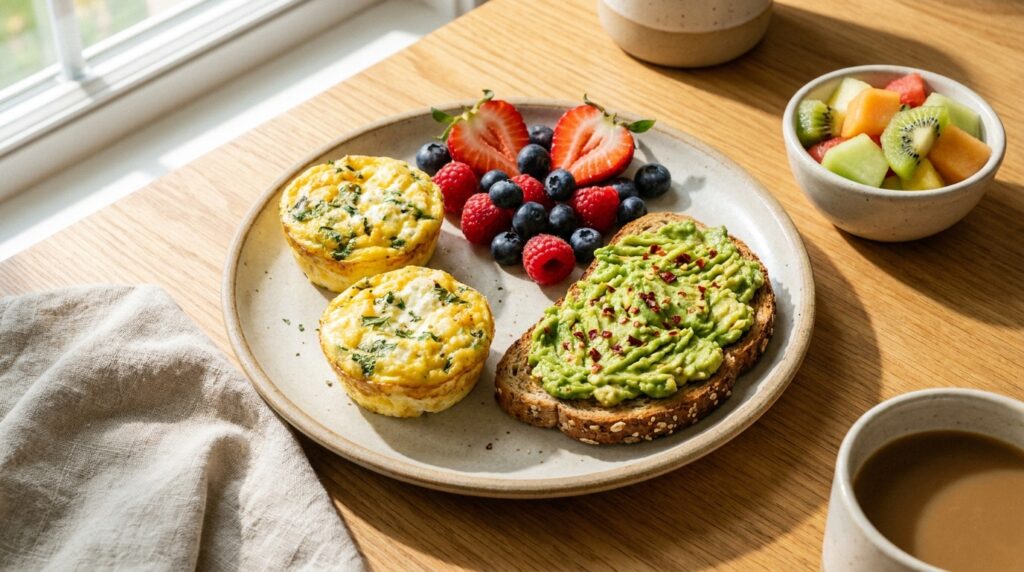
Egg bites can be the protein-focused part of breakfast, but they do not have to be the entire meal. Harvard Health’s guidance on building a healthy breakfast6 suggests pairing protein with fiber-rich carbohydrate sources and other nutrient-rich foods. That is an easy way to turn two egg bites into a more complete breakfast.
Try serving them with:
· Fresh berries, apple, orange, or another whole fruit
· Whole-grain toast
· Avocado on toast
· A small bowl of oats
· Greek yogurt and fruit
· A side salad if you prefer a savory brunch-style meal
If you train in the morning, you can prepare breakfast before your session and reheat it afterward. For a structured at-home session, the site’s 30-minute full-body home workout is one option when you have more time to train.
And if you are trying to improve your overall routine rather than chase another restrictive diet, the 13 Healthy Commitments article focuses on sustainable food and lifestyle habits instead of all-or-nothing dieting.
Frequently Asked Questions
For safety, remember that egg-containing dishes should be cooked thoroughly and refrigerated promptly. FDA’s egg safety recommendations7 also advise keeping eggs refrigerated and reheating cooked egg dishes thoroughly when served later.
Do cottage cheese egg bites taste like cottage cheese?
Not strongly. Blending the cottage cheese with the eggs removes the curd texture and leaves a mild, creamy base. The vegetables, herbs, and cheese usually dominate the flavor.
Can I make cottage cheese egg bites without a blender?
Yes. Whisk the eggs thoroughly, then stir in small-curd cottage cheese. The finished bites will have a slightly more textured interior, but the recipe still works. For the smoothest result, a blender or food processor is preferable.
Can I use egg whites instead of whole eggs?
Yes, but the texture will be lighter and less rich. You can replace some whole eggs with egg whites rather than replacing every egg. Because liquid egg-white products vary, follow the carton conversion instructions.
Why did my egg bites turn rubbery?
Overbaking is the most common reason. Remove the bites once the centers are set and have reached a safe temperature. They continue to firm slightly as they cool.
Why are my egg bites watery?
Vegetables such as mushrooms, zucchini, and frozen spinach can release a lot of liquid. Sauté watery vegetables first, squeeze thawed spinach dry, and drain roasted peppers before adding them.
Can I make Starbucks-style cottage cheese egg bites at home?
Yes. The exact commercial recipe and cooking process are different, but blending cottage cheese into eggs and baking the mixture gently creates the smooth, soft style many people associate with coffee-shop egg bites. A water pan or steam in the oven can make the texture even softer.
How long do cottage cheese egg bites last in the refrigerator?
Use refrigerated cooked egg bites within three to four days, following USDA leftover-storage guidance. Freeze extra portions if you want to prepare more than you will eat during that period.
Are cottage cheese egg bites good for meal prep?
Yes. That is one of their main advantages. They can be baked in one batch, portioned into containers, and reheated quickly, making them especially useful for busy weekday breakfasts.
Make Breakfast Easier Before the Week Gets Busy
The best meal-prep recipes remove friction from your routine. These high protein cottage cheese egg bites do exactly that: one simple mixture, one muffin pan, several breakfasts, and enough flexibility to keep the recipe interesting.
Start with the spinach-and-pepper version, then adjust the fillings after you know you like the base. Try feta and spinach one week, turkey bacon and cheddar the next, or divide one batch between two flavors.
Most importantly, do not make breakfast more complicated than it needs to be. Prepare a batch when you have time, refrigerate a few portions, freeze the extras, and pair the bites with fruit or another fiber-rich side when you are ready to eat.
For more practical ideas, browse the Healthy Quick Recipes collection on Her Daily FitActions, or rotate these egg bites with the high-protein breakfast egg wrap when you want a different savory breakfast.
REFERENCES & CITATIONS
1. Harvard Health Publishing. Healthy breakfast ideas to support energy and metabolism. Harvard Health Publishing. Cited in the section on why protein-rich breakfasts can be useful and in the balanced-breakfast section.
2. USDA FoodData Central. FoodData Central. USDA FoodData Central. Cited as the federal source for checking food composition and nutrient data.
3. U.S. Food and Drug Administration. What You Need to Know About Egg Safety. U.S. Food and Drug Administration. Cited for safe handling and thorough cooking of egg-containing foods.
4. USDA MyPlate. Dairy Group. USDA MyPlate. Cited for cottage cheese as a dairy-group food.
5. USDA Food Safety and Inspection Service. Leftovers and Food Safety. USDA Food Safety and Inspection Service. Cited for the three-to-four-day refrigerated leftover window.
6. Harvard Health Publishing. Healthy breakfast ideas to support energy and metabolism. Harvard Health Publishing. Cited for pairing protein with fiber-rich carbohydrate sources and other nutrient-rich foods.
7. U.S. Food and Drug Administration. What You Need to Know About Egg Safety. U.S. Food and Drug Administration. Cited in the FAQ section for egg storage, cooking, and reheating guidance.

